

Prior to designing and building an automated submission and approval workflow for San Antonio Review, we tried off-the-shelf solutions such as Duosuma. This change wasn’t so much about a technical upgrade; it was about building a system aligned with our values. Just as I want to approach integrating agents in a way that maintains the integrity of our publication, I also want to ensure those values are reflected in how we work with our contributors and editors.
As I’ve mentioned previously, we’re a small organization with a lean editorial staff. Because of our size, every interaction matters more. Our contributors need timely, consistent communication, along with a clear view of the publication process.
These were things an off-the-shelf solution wasn’t providing us, so I designed and built something that would.
SUBMISSION & APPROVAL PROCESS
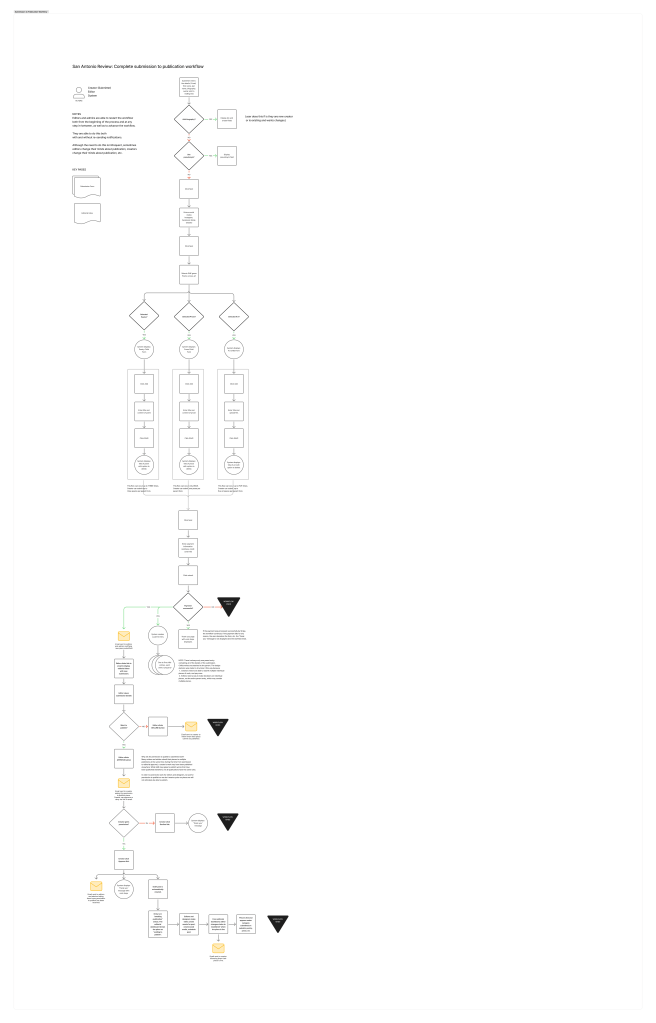
We publish on WordPress. Submissions that live in an entirely different system, outside the system where publication work happens, require editors to do too much context switching. Tracking a contributor and submission between multiple systems introduces additional touchpoints for errors, omissions, and miscommunication. Anything that introduces additional friction makes it less likely that an editor will respond promptly.
The journal publishes a wide range of content, including poetry, prose, and art. Poetry introduces some unique challenges in the submission process. While a short story doesn’t have special formatting (they are generally a series of paragraphs), poems usually have special formatting that needs to be preserved. This isn’t a technical issue; it’s a workload issue. If you’ve ever tried copy-paste from one type of document to another, you know what I mean. I needed a system that would preserve a contributor’s exact intent without requiring an editor to manually reformat in WordPress.
EDITORIAL DASHBOARD
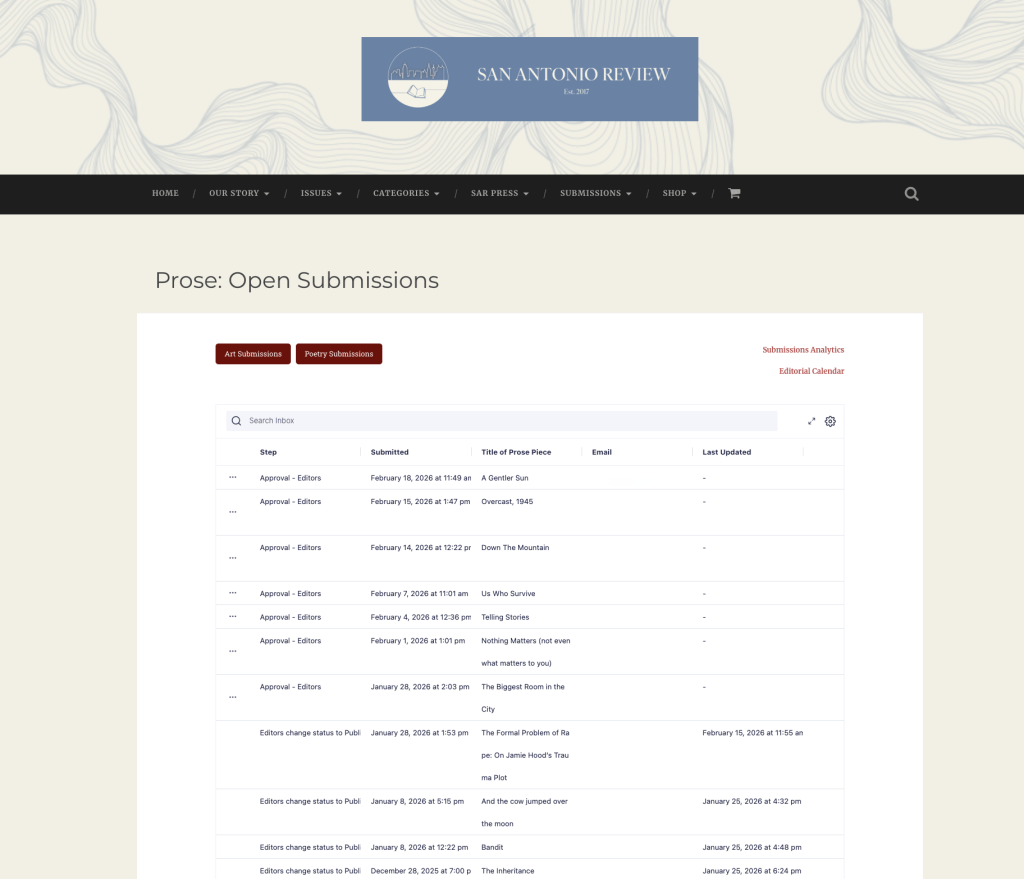
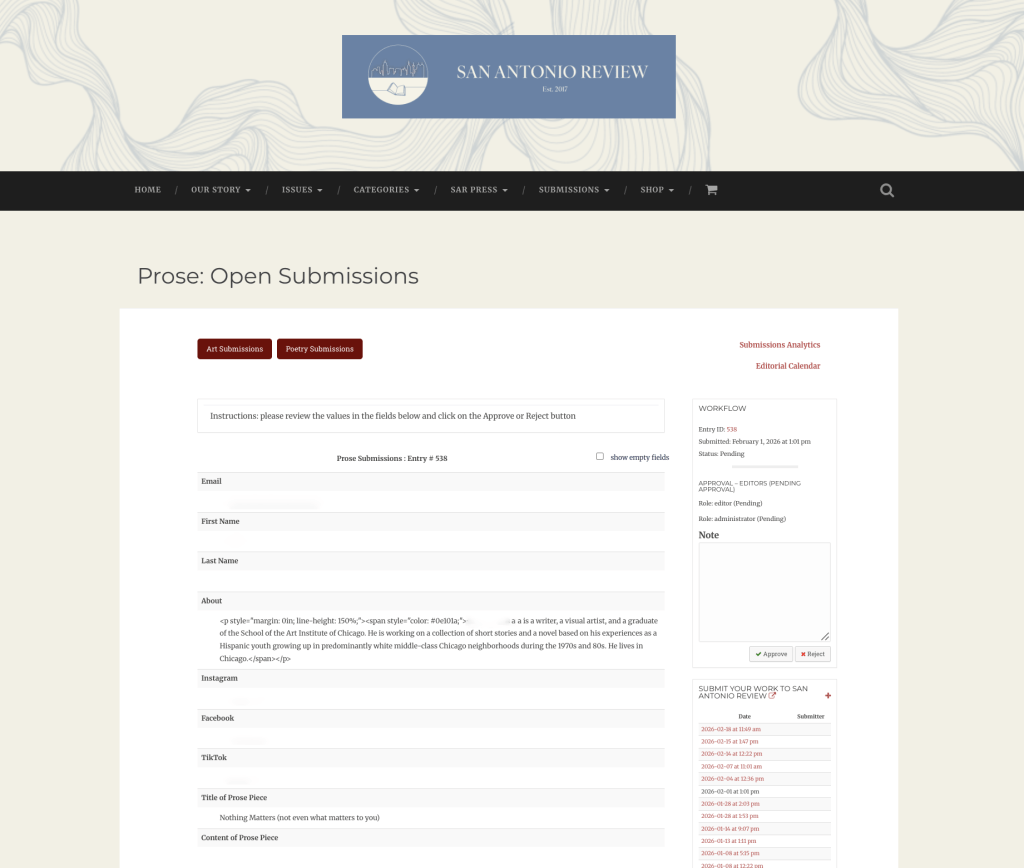
Submitting work for publication brings up the same sorts of feelings as applying for a job. Contributors want to feel like editors are evaluating their submissions with care and want to know where they are in the process. Editors needed a way to manage the back-and-forth required to get something published without writing one-off emails. So I created an automated approval workflow with an editorial dashboard that provides a window into the status of all submissions in the publication process.
The last reason for designing, building and hosting the process ourselves is more about signaling. Our process isn’t optimized for the maximum volume of contributions; mass-submission platforms like Duosuma are.
Our relationship with our community – both contributors and readers – and the trust they give us, is the most important thing we have. We take that seriously. We want to connect with the right contributors, ones that are aligned with our values and our mission. And that won’t be everyone.
 VAQUITA DESIGN